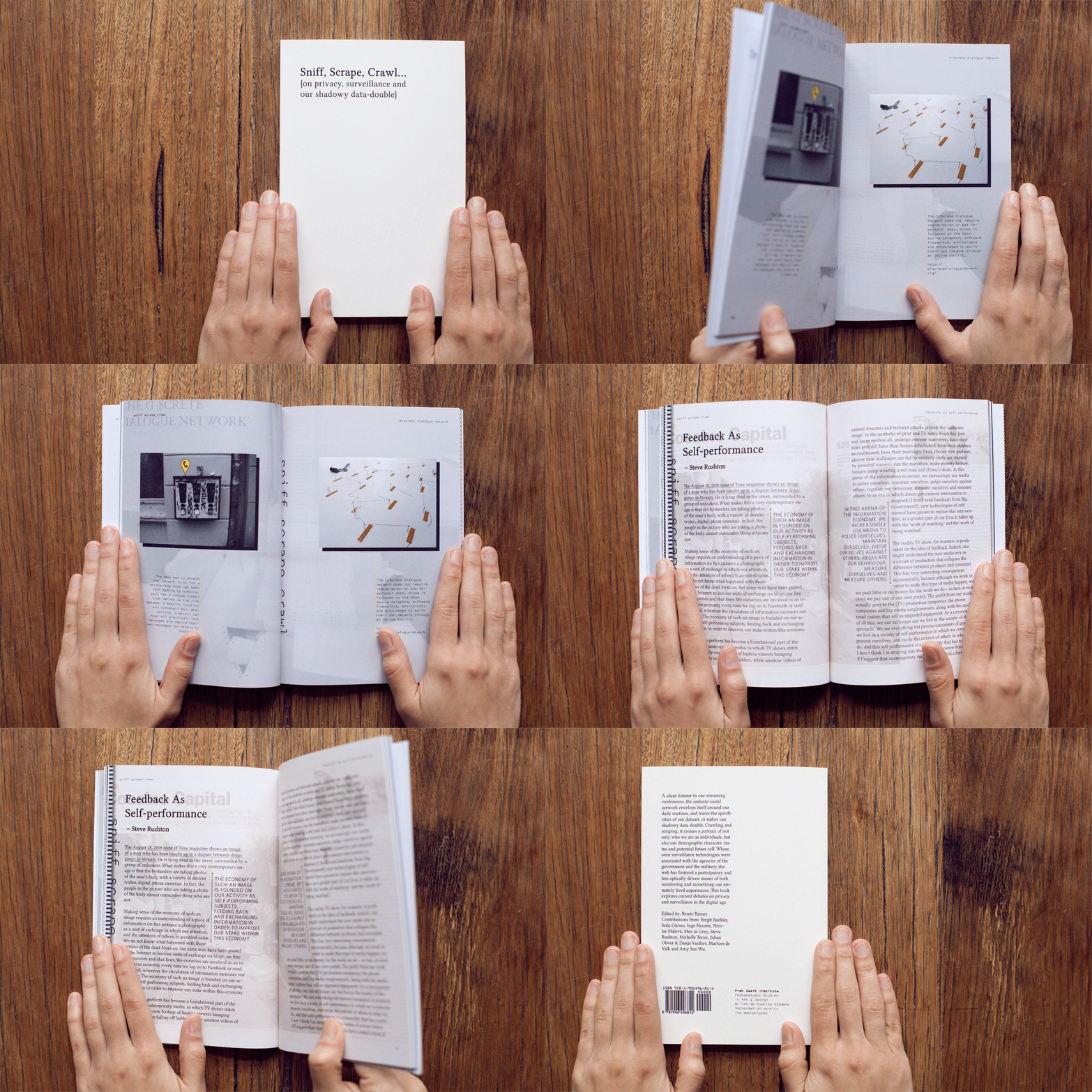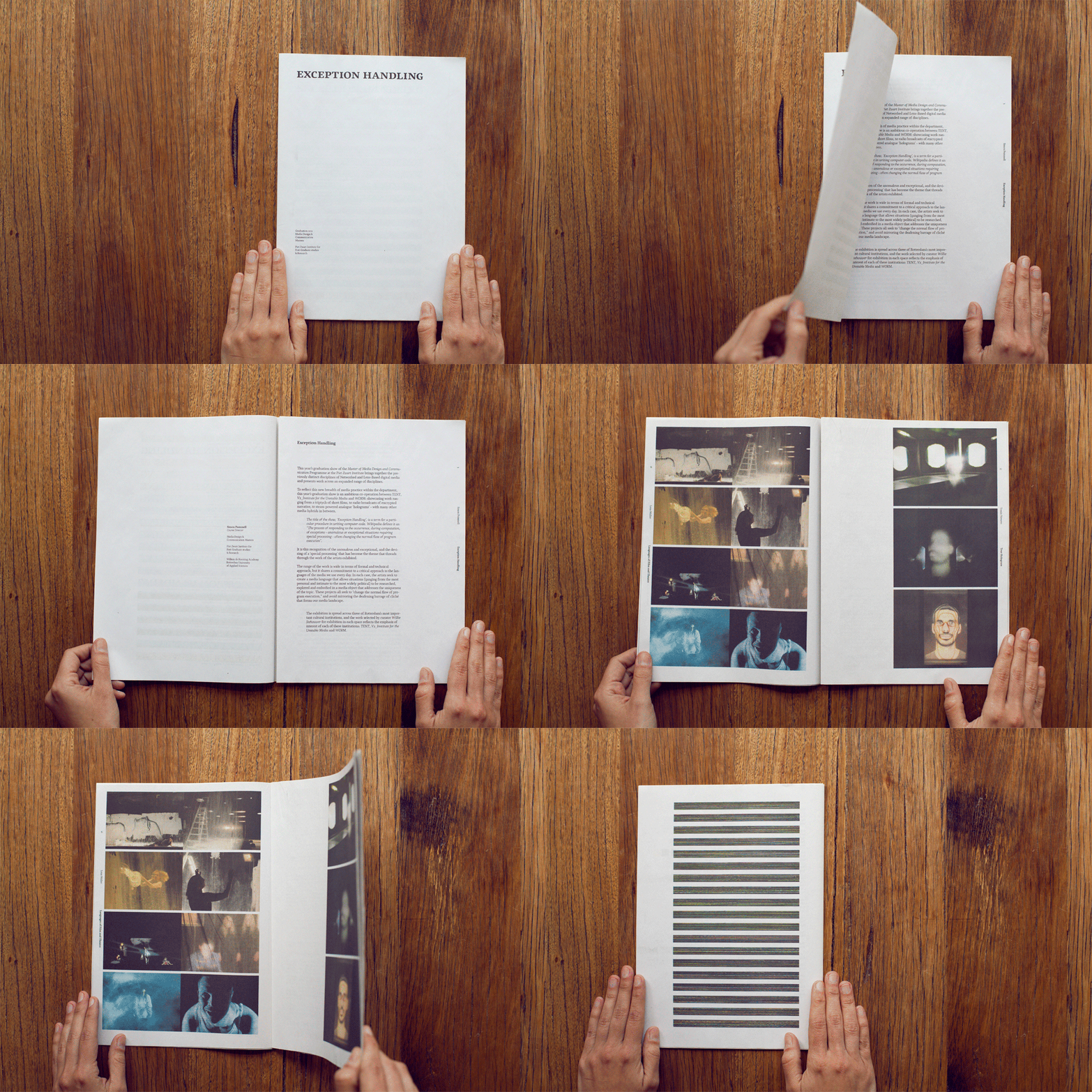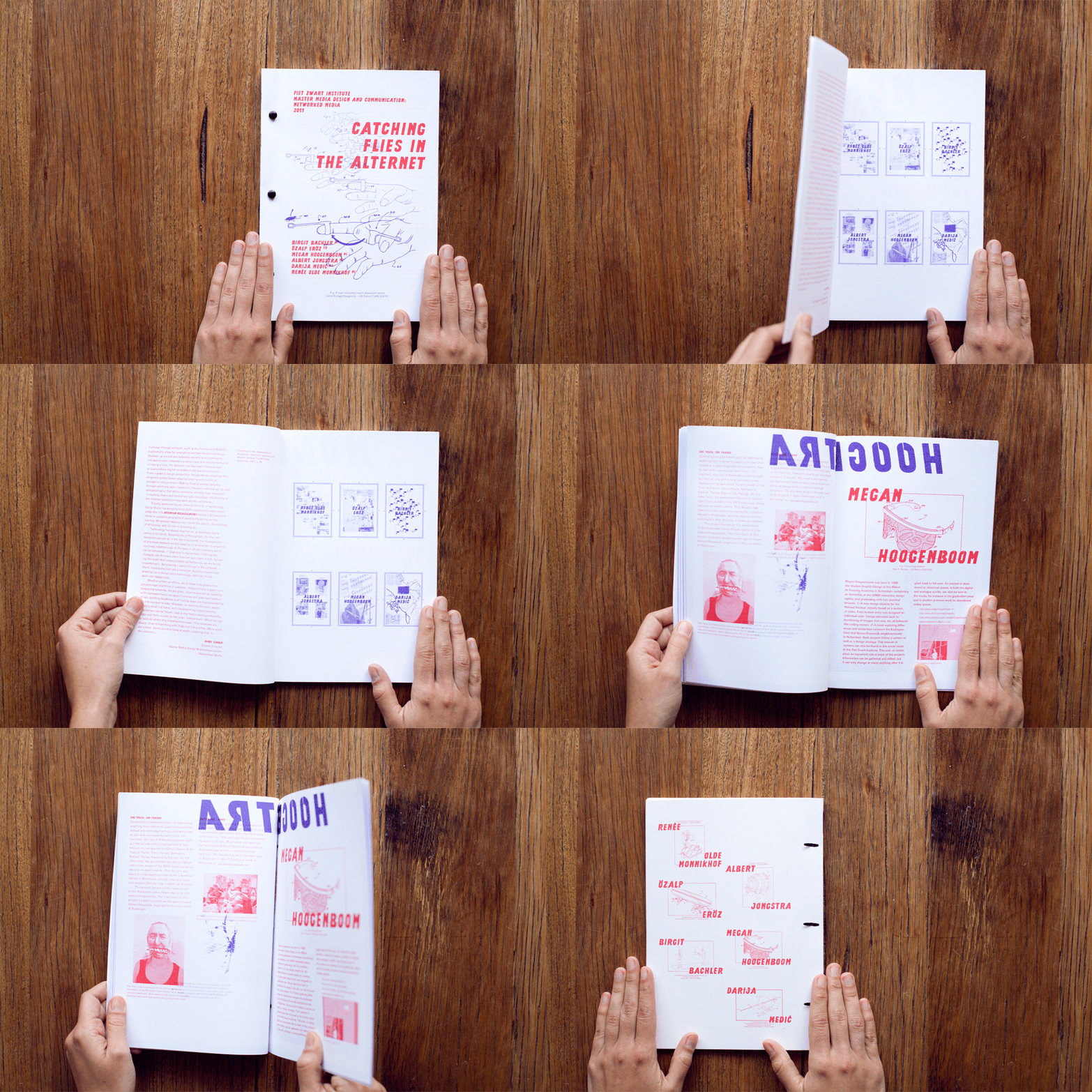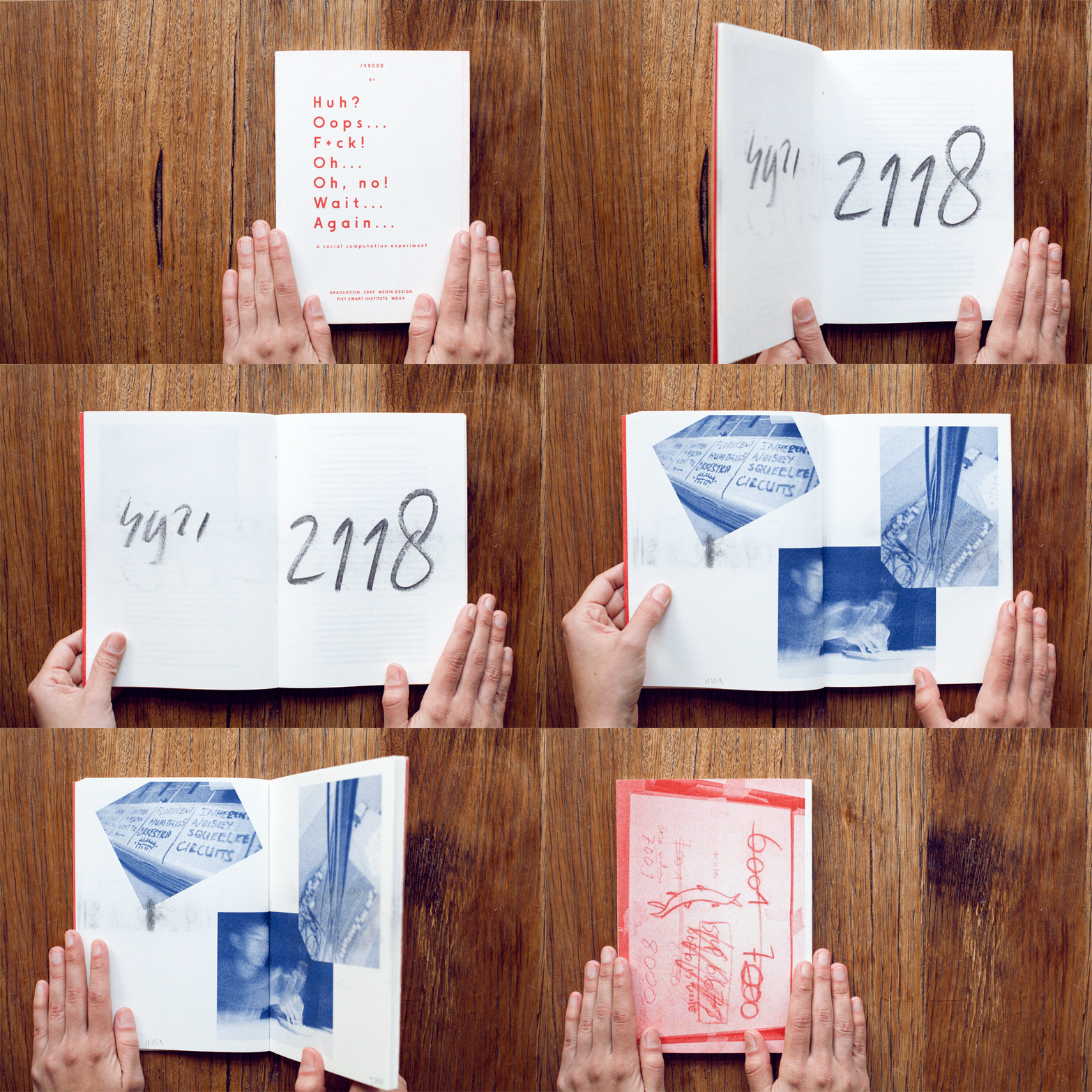
HOW TO ORDER
Our publications can be ordered via the Piet Zwart Institute.
For more information about our publications, please contact us via email or phone: +31 (0)10 794 7405.
| Bachelors | Masters | |
|
||
|
||
![]() ‘Rise Again’ at International Film Festival Rotterdam
News
Our Alumna Katarina Zdjelar will show her film ‘Rise Again‘ at the International Film Festival [...]
![]() ‘Sobota’ at International Film Festival Rotterdam
News
![]() PIET ZWART INSTITUTE RECOMMENDS: Edmund’s Bedroom
News
|
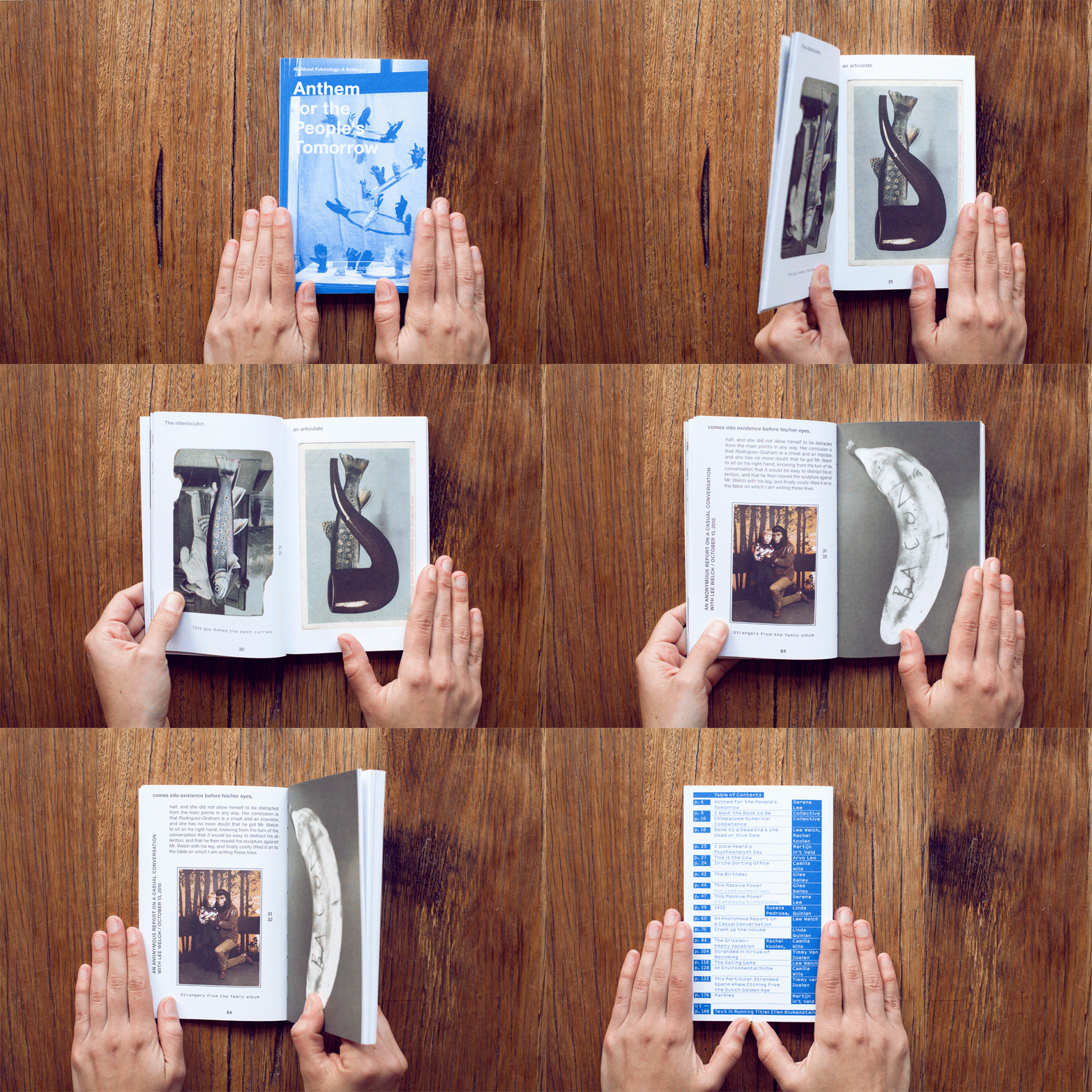
HOW TO ORDER Our publications can be ordered via the Piet Zwart Institute. For more information about our publications, please contact us via email or phone: +31 (0)10 794 7405. Authors: Master of Fine Art graduates of the Piet Zwart Institute, Willemde Kooning Academy, 2011, Ellen Blumenstein
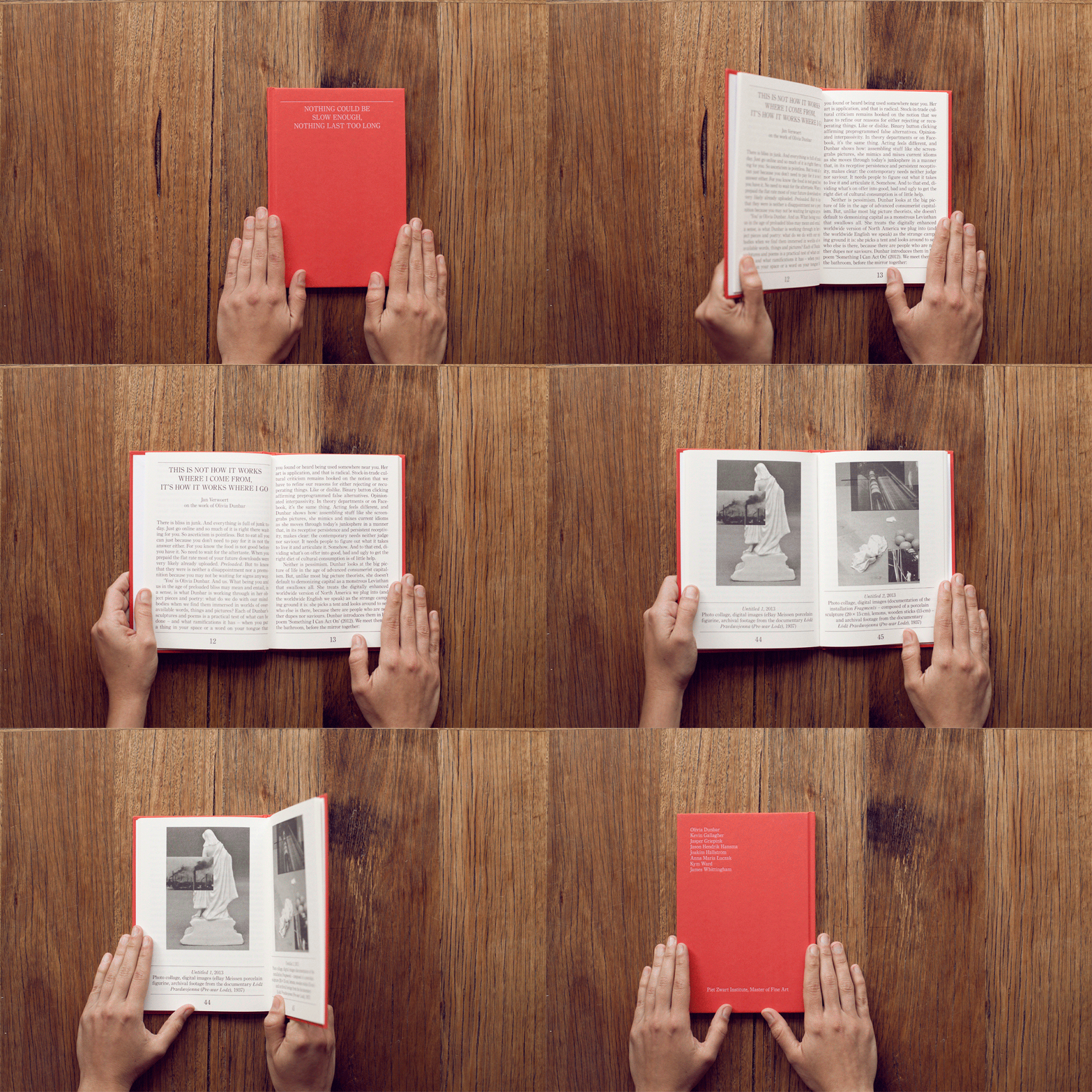
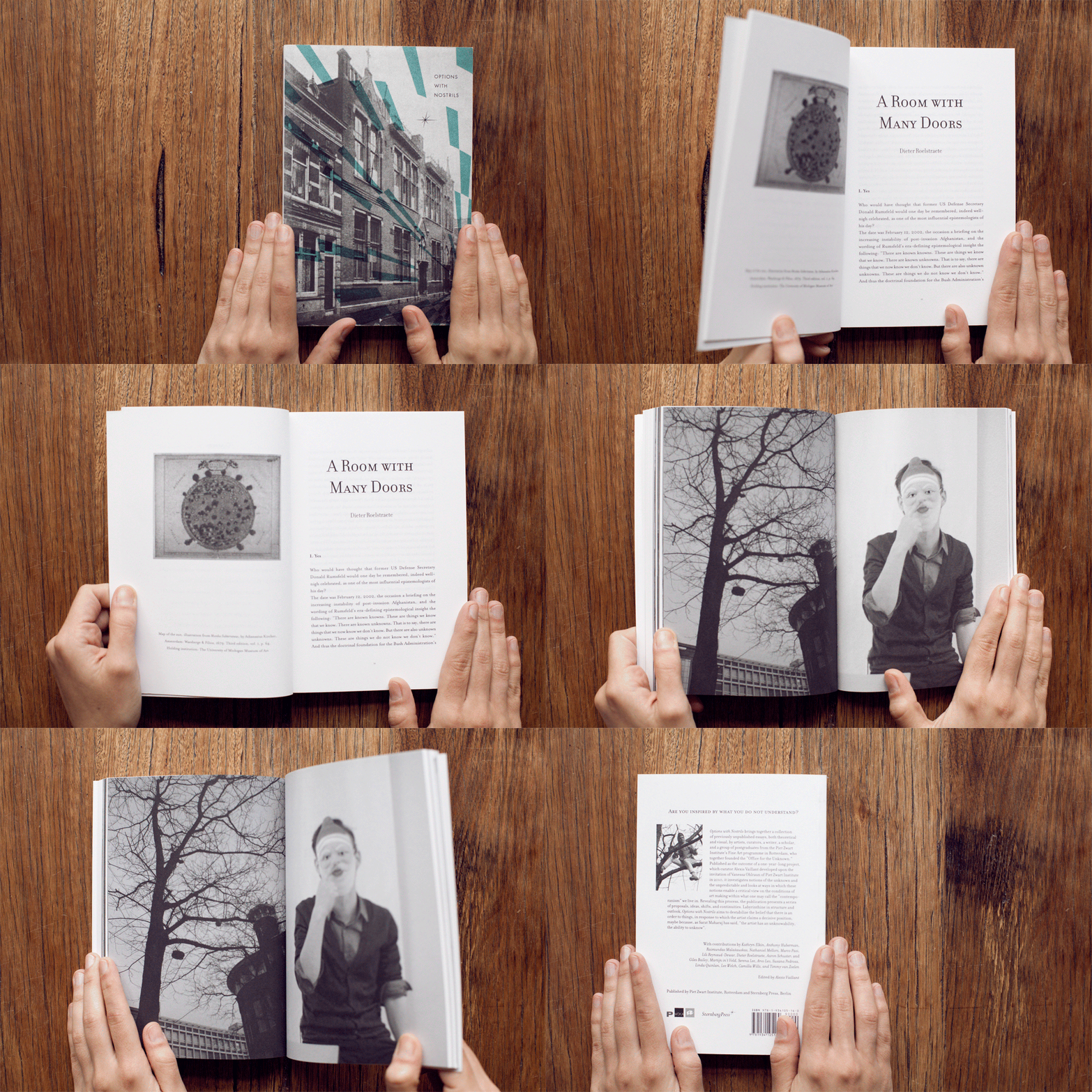
Edited by Alexis Vaillant Contributions by Kathryn Elkin, Anthony Huberman, Raimundas Malašauskas, Nathaniel Mellors, Marco Pasi, Lili Reynaud-Dewar, Dieter Roelstraete, Aaron Schuster, Alexis Vaillant, and Giles Bailey, Martijn in’t Veld, Serena Lee, Arvo Leo, Susana Pedrosa, Linda Quinlan, Lee Welch, Camilla Wills, and Timmy van Zoelen Book presentations at De Frikandel, Coolhaven 234a, 3024 AN Rotterdam March 29, 19.30h.
Options with Nostrils brings together a collection of previously unpublished essays, both theoretical and visual, by artists, curators, a writer, a scholar, and a group of postgraduates from the Piet Zwart Institute’s Fine Art programme in Rotterdam, who together founded the “Office for the Unknown.” Published as the outcome of a one-year-long project which curator Alexis Vaillant developed upon the invitation of Vanessa Ohlraun at Piet Zwart Institute in 2010, it investigates notions of the unknown and the unpredictable and looks at ways in which these notions enable a critical view on the conditions of art making within what one may call the “contemporanism” we live in. Revealing this process, the publication presents a series of proposals, ideas, shifts, and continuities. Labyrinthine in structure and outlook, Options with Nostrils aims to destabilize the belief that there is an order of things in response to which the artist holds a decisive position, maybe because, as Sarat Maharaj has said, “the artist has an unknowability, the ability to unknow”. Co-published by Piet Zwart Institute, Willem de Kooning Academy Rotterdam University and Sternberg Press Book presentation by the Piet Zwart Institute as part of the thematic project Office For The Unknown
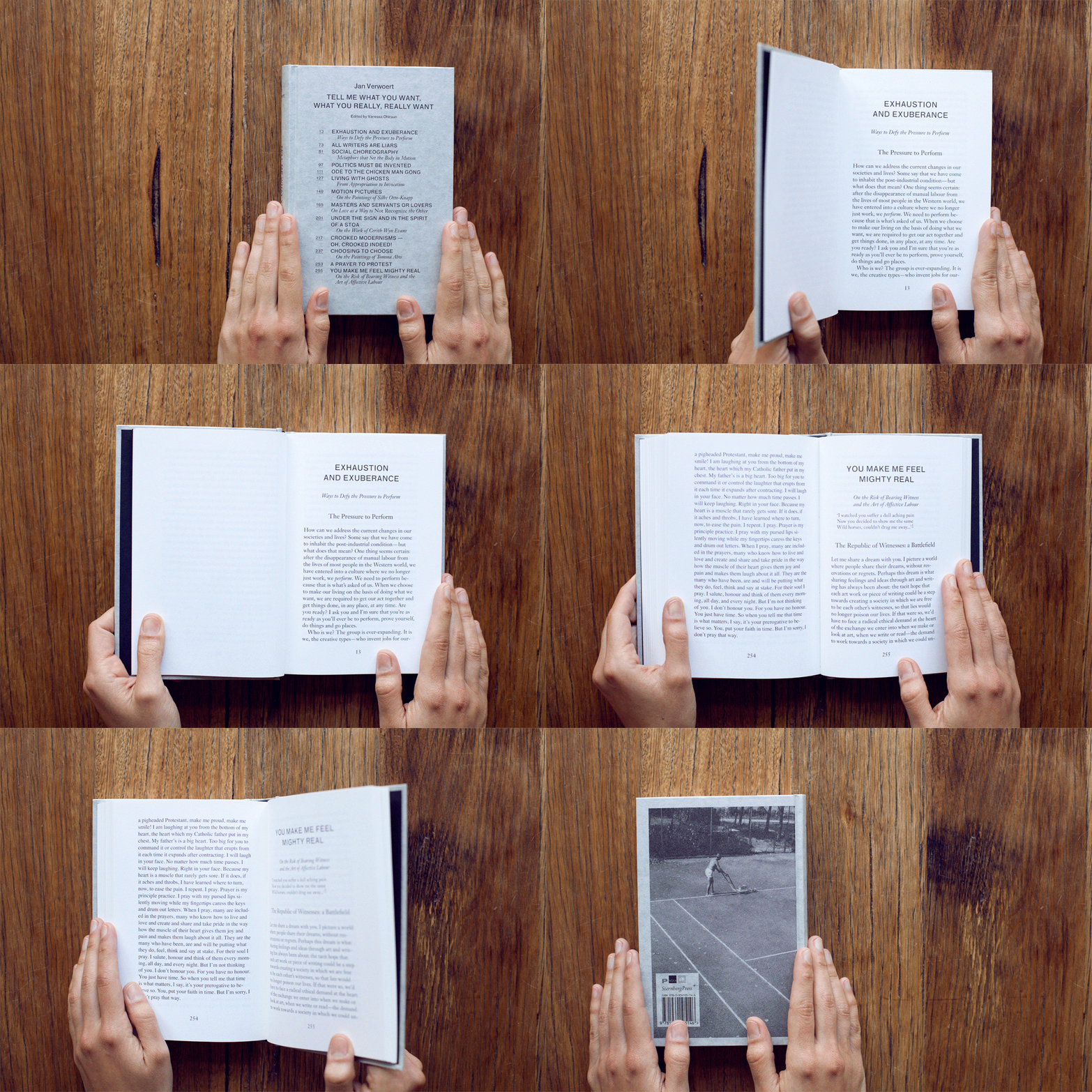
———————————————————– Tell Me What You Want, What You Really, Really Want Edited by Vanessa Ohlraun Book presentations at Salon Populaire on November 30, 20.00h and at Piet Zwart Institute on February 17, 19.30h.
Tell Me What You Want, What You Really, Really Want brings together a selection of recent writings by art critic Jan Verwoert for the first time. Published in collaboration with Sternberg Press, Berlin/New York, the book galvanizes central themes Verwoert has been developing in pursuit of a language to describe art’s transformative potential in conceptual, performative, and emotional terms. He analyzes the power of public gestures to constitute communities as well as the pressure to perform that governs the sphere of creative labor, in order to show how particular artists perform gestures and invoke community differently. Exploring the emotional power games that shape social relations, Verwoert looks for an alternative ethos of action and feeling, asking: How can a modernist approach to artistic form as a means of social critique be expanded to fully avow its subliminal affective undercurrents, and produce a pleasurably crooked form of criticality in art and writing?
Co-published with Sternberg Press, Berlin/New York ———————————————————–
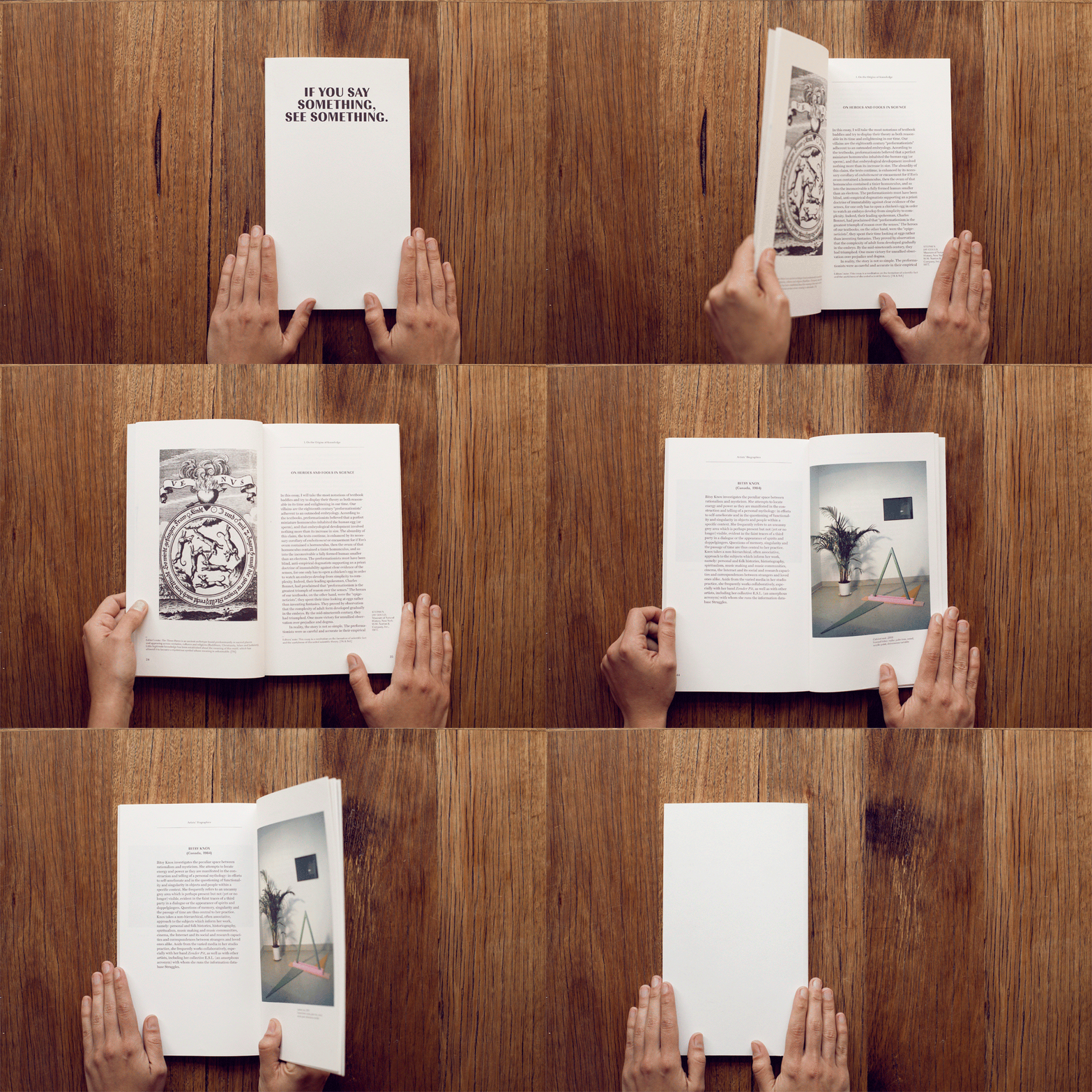
If You Say Something, See Something Dear Annie, Bat Sheva, Bitsy, Derek, Diana, Ghislain, Jay, Marnie, Priscila, Selina, Sjoerd and Tom, Finally I came up with a title for the show (with the help of a couple of Lithuanians and some good Belgian beer). It wasn’t easy to figure out because, like the show, it needed to accommodate disparate desires and artistic interests, and try to bring them all together as one whole that is finally not contrived but meaningful for everyone. As am sure you recall, we started out discussing two possible options for the show: Either, you all go on doing what you are doing anyway, and we just try to place your work well in the given space, and I write some kind of legitimating text trying to articulate something about why this show is actually a show. The other option was to hand you a precise commission for which you had to produce new work in the hope that this backbone would bring together a coherent exhibition rather than an ad hoc group of artworks. Reluctantly, you opted to take me up on this second idea. As a curator I don’t think it is my job to come up with random ideas for commissions, and since you seemed to find affinities between your works, I asked you to collectively come up with five or six sentences that you thought would represent your common interests. I took your list and without your knowledge passed it on to Guy Ben-Ner to see what he could do with it. I asked Guy in particular, not only because am a big fan of his work, but more because he’s an artist who thinks a lot about what it means to be an artist, what that implies about his own life and his practice. As his various schooling experiences have left a strong impression on him, I felt he was in a good position to think about where you are at and understand your state of mind. Being the class clown that he is, I thought he could help you lighten up a bit and have some fun with it too. Guy suggested you “Go and get a life”; he encouraged you to insert fiction as a tangible reality into your lives and try to make that experience valuable. But as Mike Sperlinger says in his catalogue text, the brief is … “a prescription to be prescriptive” and … “that kind of structure of discipline, of self-consciousness and of engagement sits more easily with certain artists, certain practices than others…” and inevitably “generated its own rebels and Bartleby’s who would prefer not to.” But at the end of this experiment, we stand in a show and with a publication that speaks to us about the uncertainty of how knowledge structures come about (Jay, Tom and Sjoerd), the dubiousness of representation (Annie, Marnie and Priscila), the desire for the poetic (Bat Sheva, Ghislain and Diana) and of course where does taking action fit into all this (Bitsy, Derek and Selina). And I think that’s where we wanted to be all along… Finally, “If you say something, see something.” is the title of a poem by Charles Bernstein and it is his word play on the New York anti-terror street campaign that said “If you see something, say something.” I guess the idea of those who came up with this campaign was to turn every day people into a fearful vigilante mob, but that’s another story altogether… It’s your title now because I think it is a reminder of the necessity to look around and be inspired by the world; a reminder that, as intriguing as research might be, what YOU make is the point. And of course, it is poetic and what’s more important than that? So here we are… All the best, Mai Published by Piet Zwart Institue – Master Fine Art Willem de Kooning Academy, Rotterdam University. Edited by MaiAbu ElDahab and the graduating students of 2010. Please see Graduation exhibition for further information. ———————————————————– Resonant Bodies, Voices, Memories
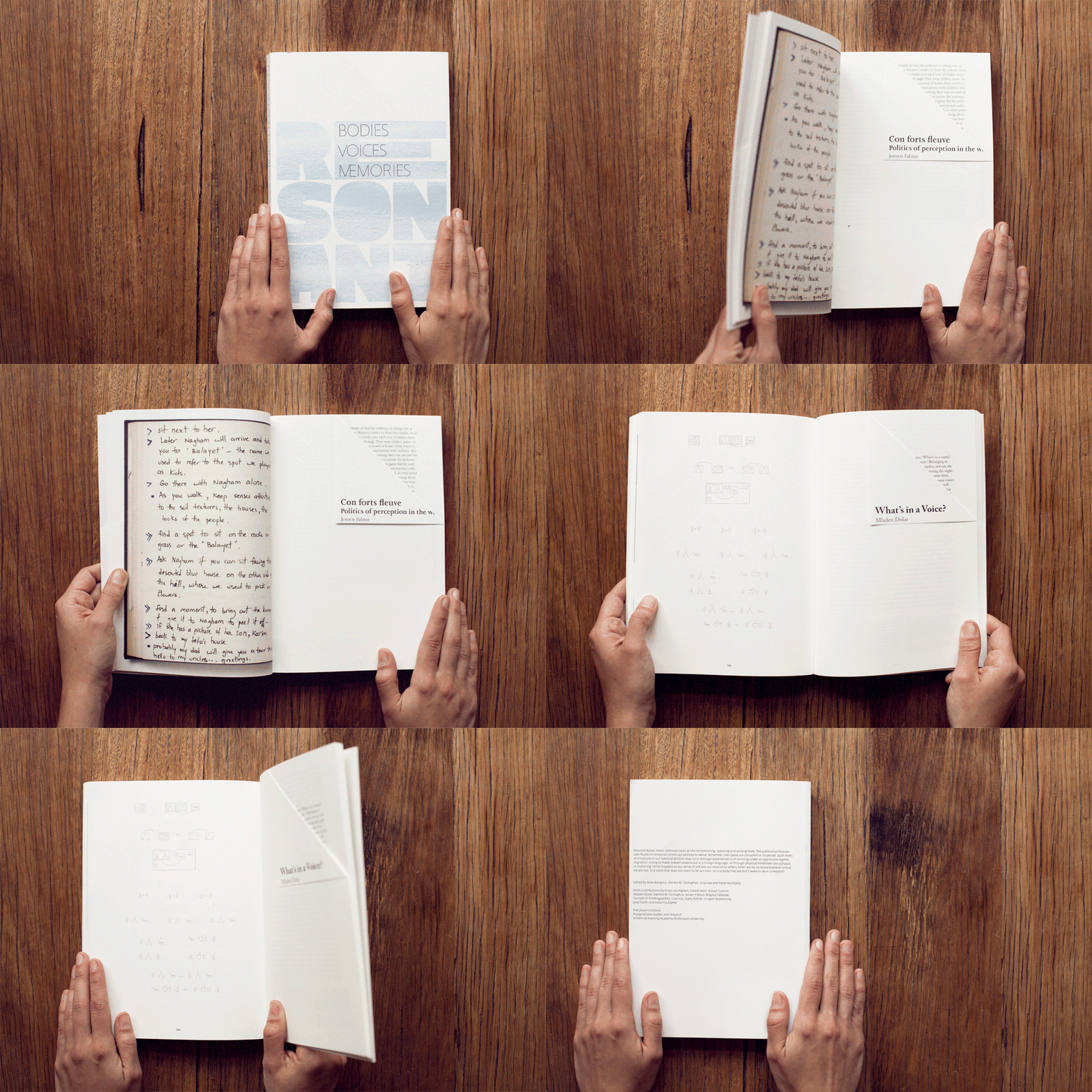
The contributors to this publication each in different ways reconsider the relation between mind and body, apparatus and signification, interiority and exteriority, when we are making sense of the past and the present. The indivisibility between these categories especially gains pertinence when the body, memory and language are somehow dislocated or dissociated, and thus caught in an impossible division – through migration, through technological mediatisation (as in speech machines, telephone, cinema), or through a breakdown of habitually established abilities (as in amnesia or aphasia). Edited by Anke Bangma, Deirdre Donoghue, Lina Issa and Katarina Zdjelar. With contributions by Ernst van Alphen, Ozlem Altin, Steven Connor, Mladen Dolar, Jeroen Fabius, Brigitte Felderer, Gunndis Finnbogadottir, Suely Rolnik, Imogen Stidworthy, and Jalal Toufic. (December 2008). English, 224 pp., with colour ill., paperback, 500 copies Another Publication
Magnanimous in its ubiquitous applications, the “other” floats between different points of view. Twelve writers were invited to write a preface to a possible book around the “other.” Together, these prefaces trace different identifications with the term, such as collaboration, love, aesthetics, institutional critique and globalisation. In addition, 164 artists submitted a cover for this book, and each compilation of texts is framed by one single cover image. The “other” referred to in this book thus keeps shifting from one possible/impossible other to the next, encouraging a mutation from the initial concept of otherness into “anotherness.” Edited by Renee Ridgway and Katarina Zdjelar. English, 120 pp., with 164 unique covers, paperback ———————————————————– Afterouge
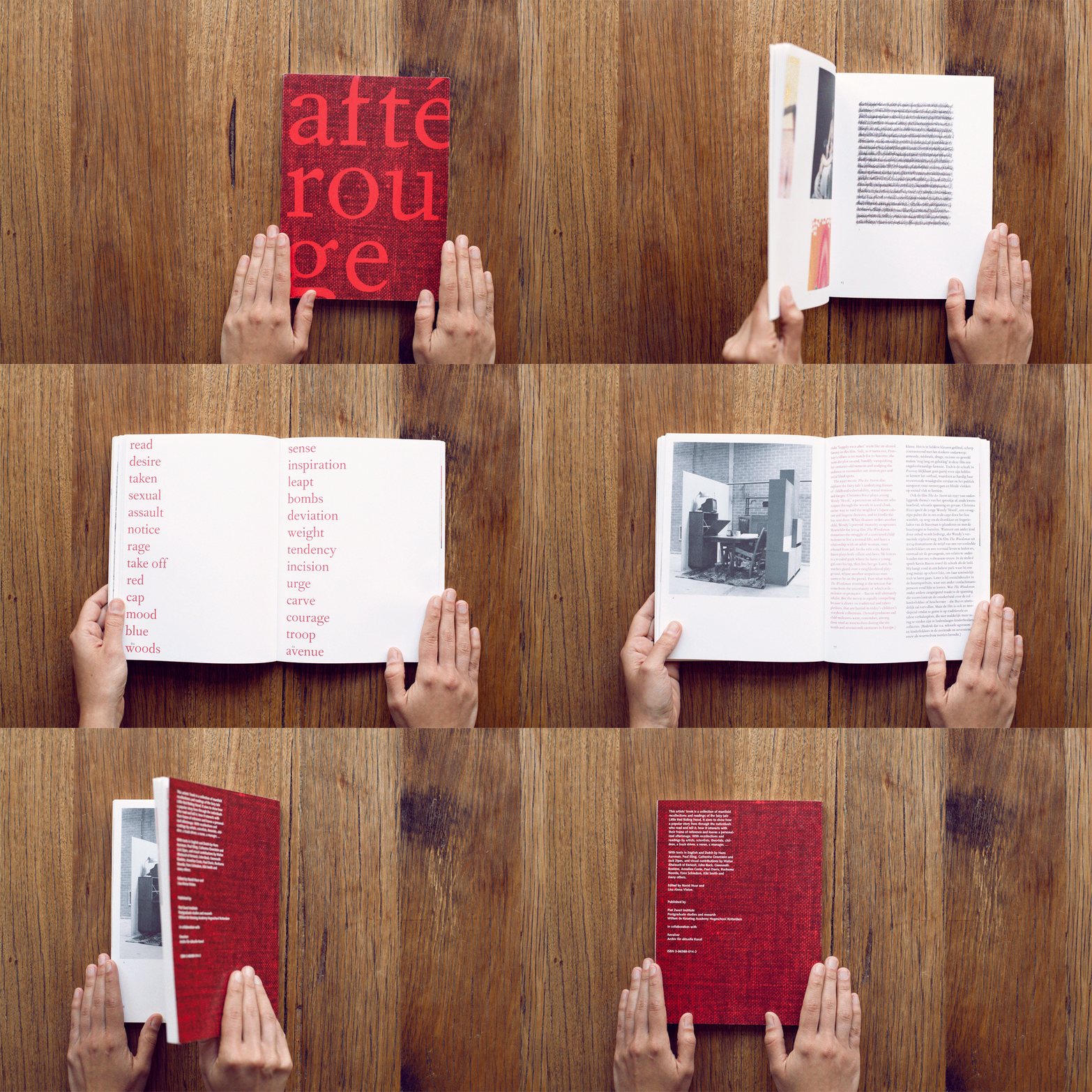
This artists’ book is a collection of manifold recollections and readings of the fairy tale Little Red Riding Hood. It aims to show how a popular story lives through the individuals who read and tell it, how it interacts with their frame of reference and leaves a personalized afterimage. With recollections and readings by artists, scientists, theorists, children, a truck driver, a nurse, a manager… Edited by Navid Nuur and Lisa Alena Vieten. Dutch/English, 96 pp., colour ill., paperback, 500 copies ———————————————————– Experience, Memory, Re-enactment
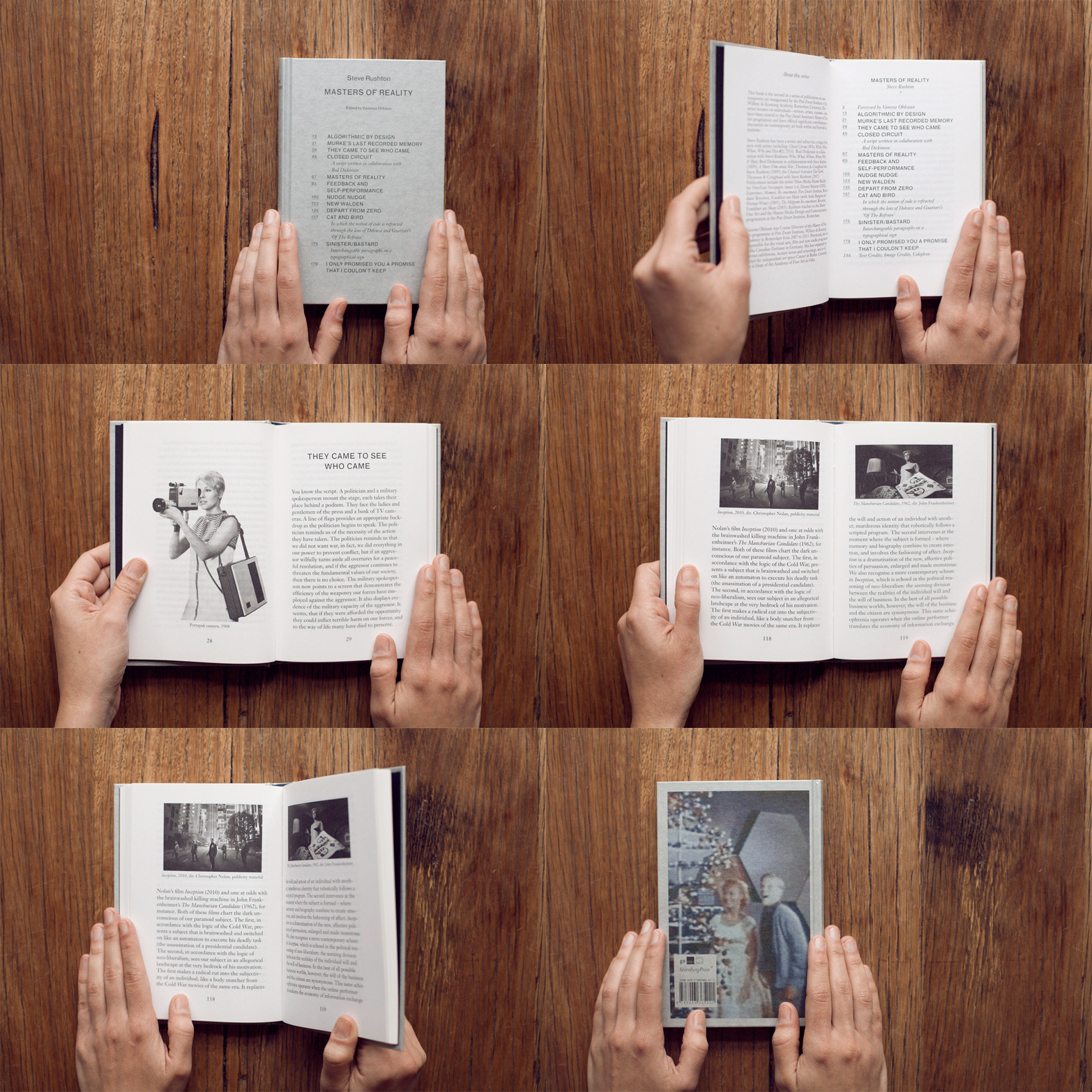
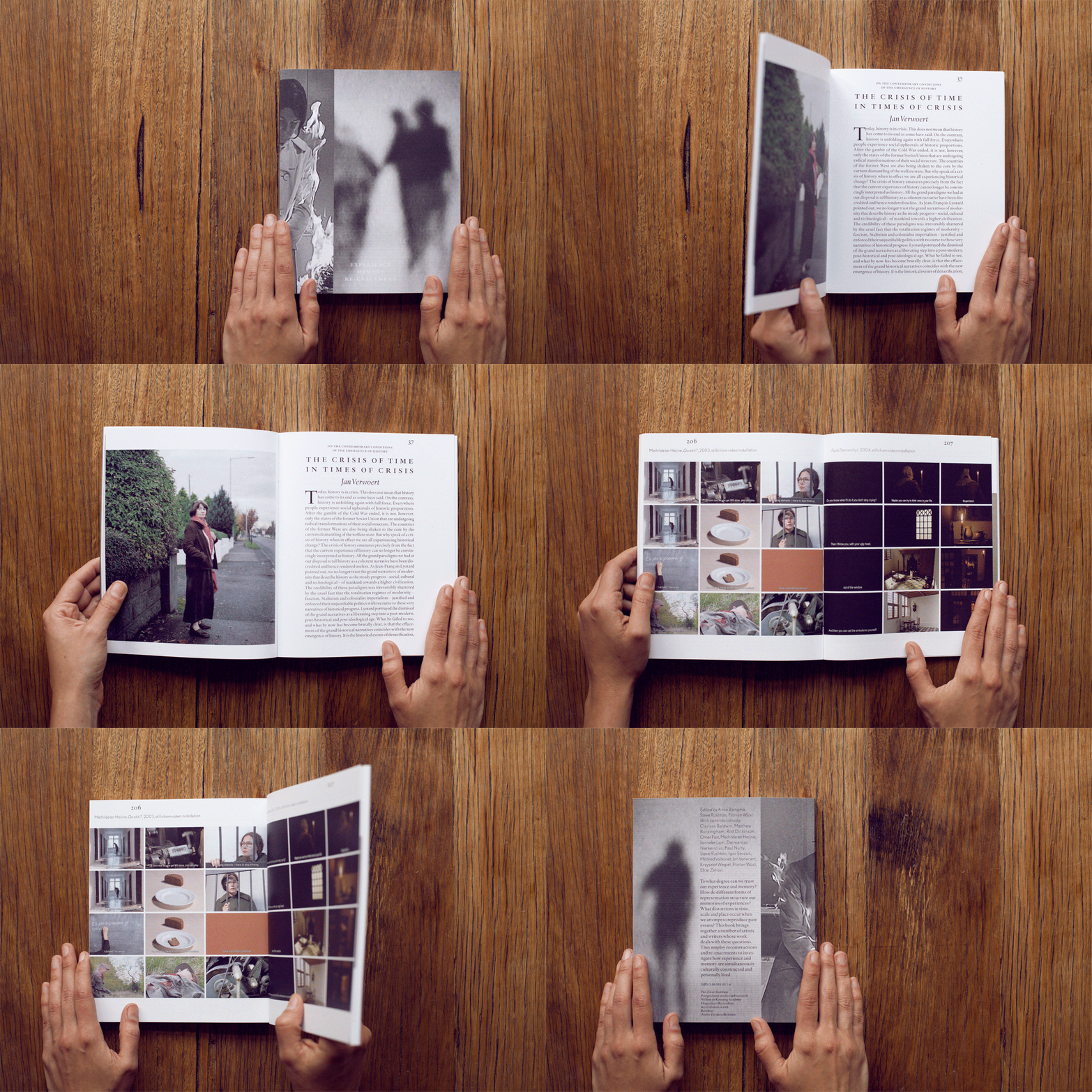
This publication follows the Experience, Memory, Re-enactment lecture series, held from February-May 2004. The contributors to Experience, Memory, Re-enactment employ reconstructions and re-enactments to explore how experience and memory are simultaneously culturally constructed and personally lived. Their works take playful and parodying forms, but often also literally or metaphorically put the individual body at risk. They thus recall in the viewer the impossibility of taking a distance and of separating analytical reflection and emotional response. Edited by Anke Bangma, Steve Rushton and Florian Wüst. English, 280 pp., with colour ill. ———————————————————– Black Friday Black Friday is a publication coming out of the Black Friday project with Christoph Keller Edited by Christoph Keller. ISBN 3-86588-098-3 ———————————————————– Pages #4 Pages magazine is an initiative of Nasrin Tabatabai and Babak Afrassiabi, aiming to function as a platform for collaboration and exchange between artists and writers from Iran and elsewhere, and to investigate how artistic practices are both constituted by and seek to address social, political and cultural conditions. A special section of Pages #4 is devoted to texts and visual contributions made in conjunction with the thematic project The Production of Private and Public Spheres. Edited by Babak Afrassiabi and Nasrin Tabatabai. To order Pages #4 or to subscribe please contact episode publishers. ———————————————————– Looking, Encountering, Staging
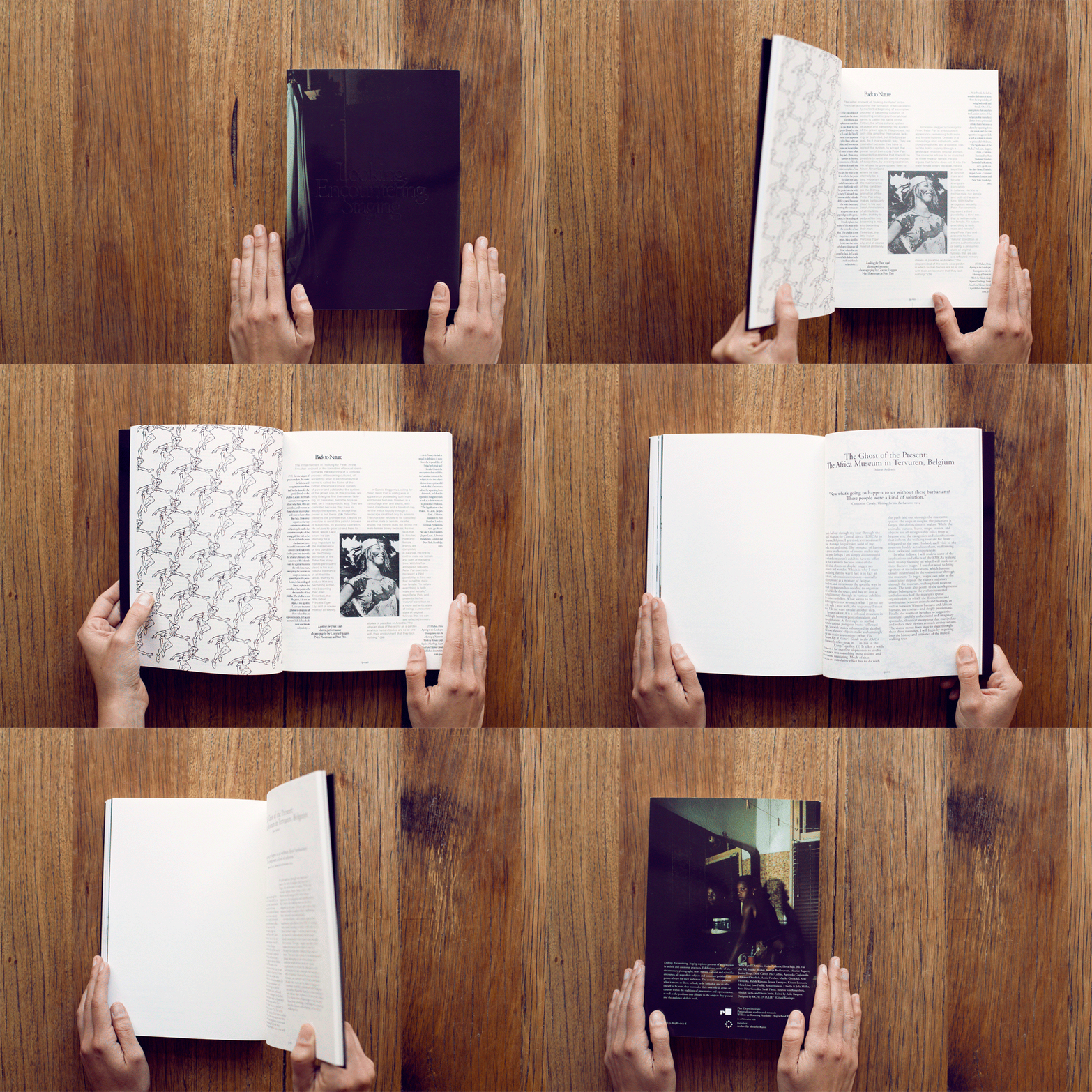
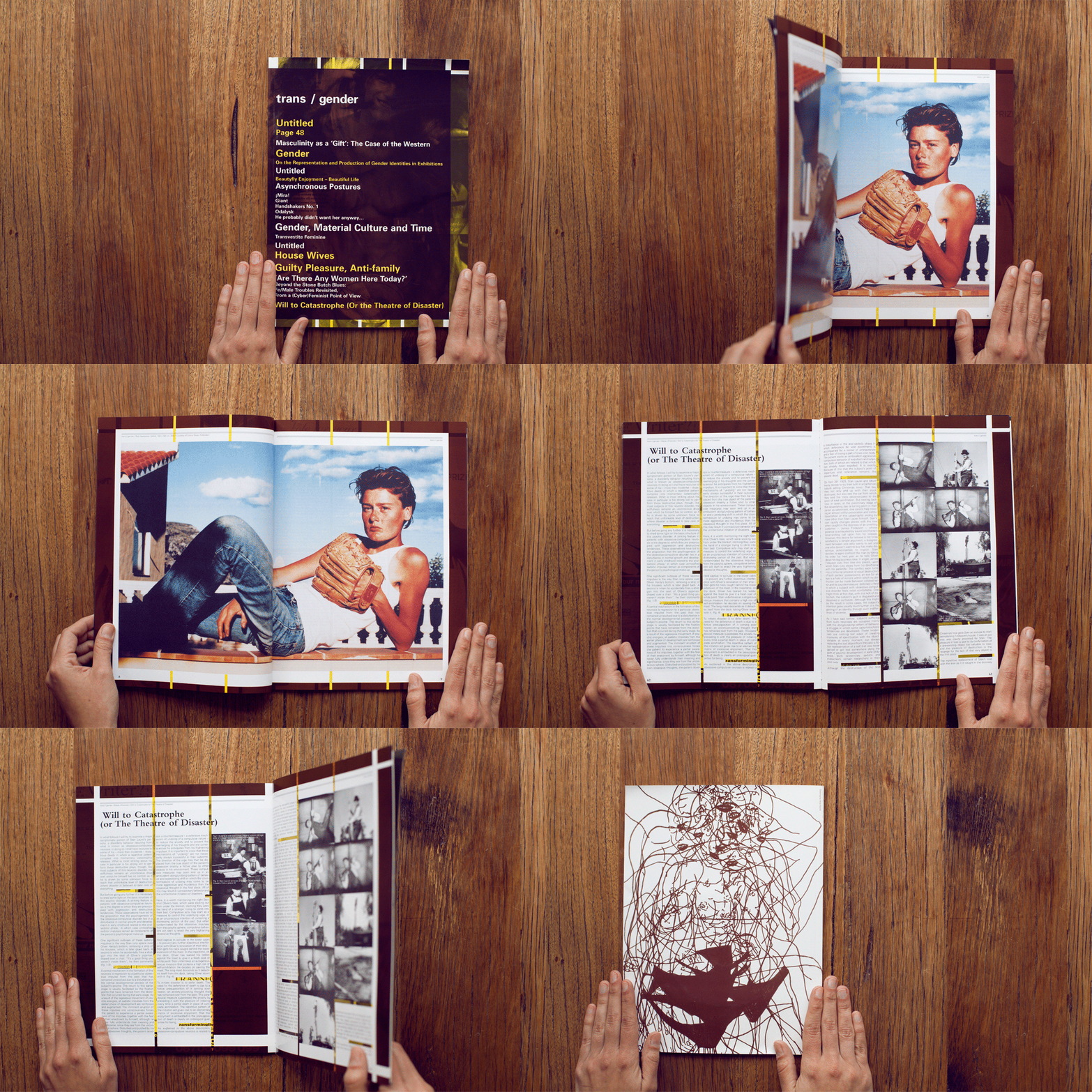
Looking, Encountering, Staging investigates the ways cultural practices (exhibitions, news reports, documentary photography, artistic and scientific discourses) stage their subjects and thus construct positions for their audiences. The contributors analyse how these positions come to be naturalized as ‘given’, or use strategies of staging, performing and re-theatricalization to rethink the role of the artist or curator as mediator and to relocate the viewer. Edited by Anke Bangma. English, 332 pp., with colour ill. ———————————————————– trans/gender A magazine around gender, transgender and the discussion surrounding process of defining sexual identity. The trans/gender magazine offers an interplay among gender (theory and practice), archaeology, media and art, and shows how the space around the symbol “/” might be explored. Edited by PZI participants Nina Hoechtl and Suzanne van Rossenberg. English, 66 pp., with colour ill. and CD-Rom, paperback ———————————————————– Territorial Invasions of the Public and Private
A publication about the shifting borderlines between the public and the private, addressing such themes as tourism, mobile telephones, hygiene, home decoration, shame, voyeurism and exhibitionism. Edited by Anke Bangma. English, 144 pp., colour ill., paperback ———————————————————– Madam I’m Adam – The Organisation of Private Life
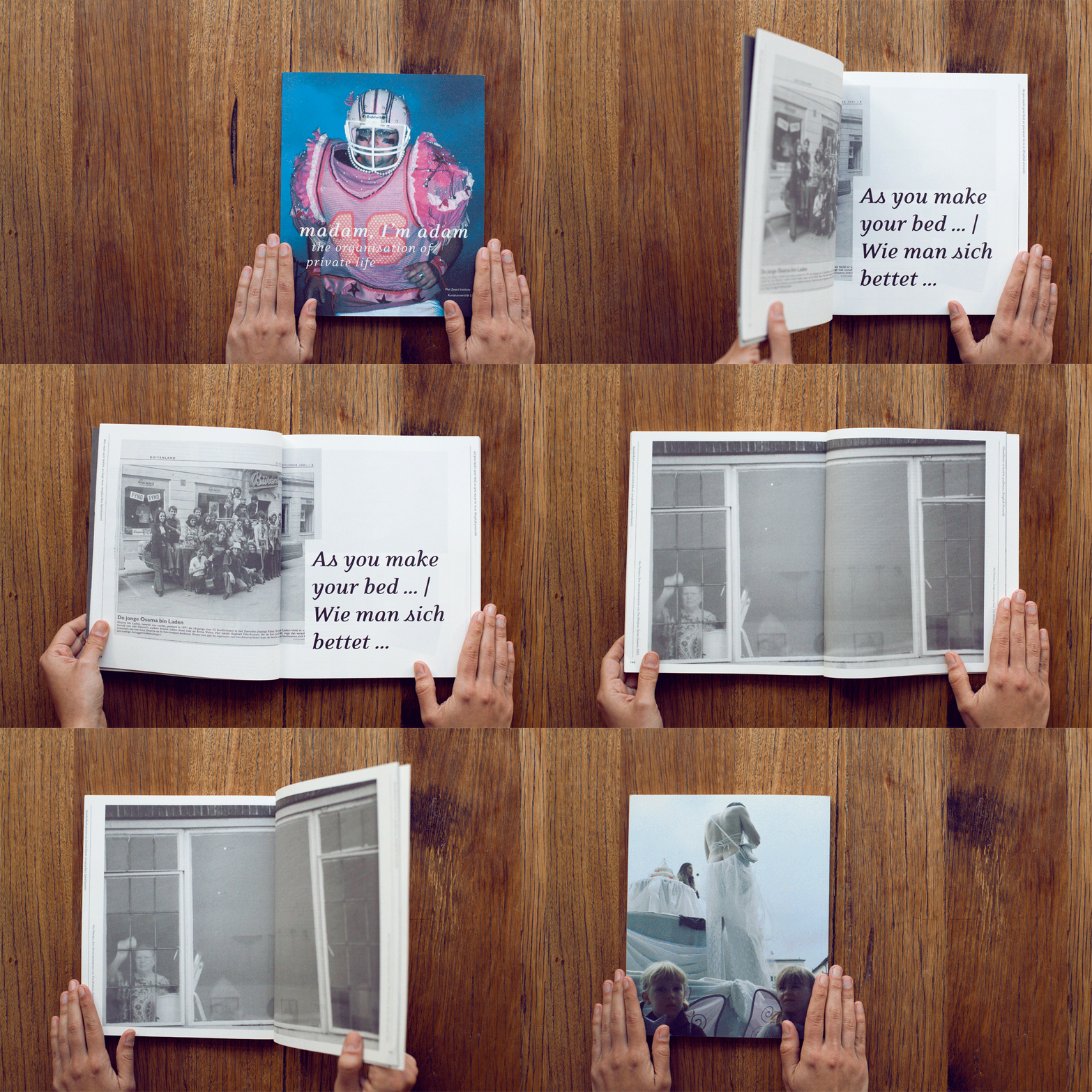
A publication about the organisation of private life, the nuclear family and the institutionalisation of love , realised in the framework of the thematic project The Organisation of Private Life, a co-production by the Piet Zwart Institute and the Kunstuniversität Linz. Edited by Anke Bangma, Klaas van Gorkum, Iratxe Jaio, Jeanette Pacher and Peter Westenberg. German/English, 152 pp., b/w ill., paperback ———————————————————– I Need the Truth and Aspirin
A publication initiated and produced by PZI participants, tracing small and large dreams and their social implications. How far do we go to defend and protect our dreams? The result is book about photography and the myth of a happy family life; standardisation of living environments; urban planning and left-over spaces; the garden as a utopian place; and ideals and violence. Edited by Iratxe Jaio and Kirsten Leenaars. English, 60 pp., colour ill., paperback ———————————————————– Puur en zuiver A special issue of HTV De IJsberg artist’s magazine, produced in the framework of the thematic project Hygiene with Anne Bruggenkamp and Peter Westenberg. ———————————————————– Sites+Situations
A publication about art and the public domain, initiated and produced by PZI participants. Sites+Situations addresses the relationship between artists and the public or users. Without ignoring their own roles as artists, the authors placed themselves in the position of the a udience or users as part of their research. This provided the opportunity for critical consideration of the possibilities offered by engaged artistic practices, as well as the potential for members of the public and users to be producers in their own right. edited by Anke Bangma and Femke Snelting. Dutch/English, 17 x 23 cm, 112 pp., 90 ill., paperback, 500 copies |